Graphic: Basics09

Hamburg Science Summit 2024

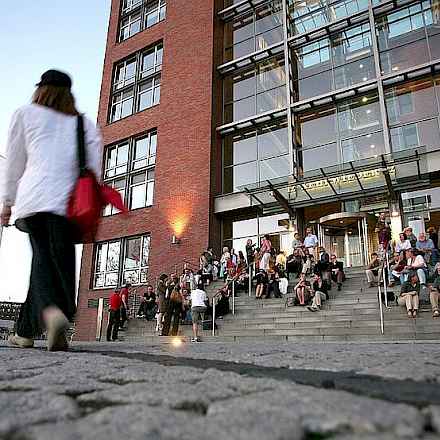
19 September 2024 | Körber-Stiftung | Hamburg, Germany

“Europe’s Path Towards Tech Sovereignty”

Technologies shape our daily lives and will do so even more in the years to come. In a world facing global challenges, from the climate crisis to the emergence of pandemics, technological innovation plays a crucial part in ensuring health, prosperity and sustainability. But technologies also play a critical role in geopolitics. Be it the development of artificial intelligence, new vaccines or key innovations for the energy transition: The rapidly intensifying competition for the best technologies has become a matter of geopolitical power. From a European perspective, this raises the question of how Europe – including both EU and non-EU partners – should navigate the global technology race.

  • Körber-Stiftung/Jann Wilken
  • Körber-Stiftung/Jann Wilken
  • Körber-Stiftung/Jann Wilken
  • Körber-Stiftung/Jann Wilken
  • Körber-Stiftung/Jann Wilken
  • Körber-Stiftung/Jann Wilken
  • Körber-Stiftung/Jann Wilken
  • Körber-Stiftung/Jann Wilken
  • Körber-Stiftung/Jann Wilken
  • Körber-Stiftung/Jann Wilken
  • Körber-Stiftung/Jann Wilken
  • Körber-Stiftung/Jann Wilken

Highlights

  • Leading voices such as Enrico Letta (former Prime Minister of Italy), Uwe Cantner (Chair, German Commission of Experts for Research and Innovation), Patrick Cramer (President, Max Planck Society), Maria Cristina Russo (Director Prosperity, EU Directorate-General Research and Innovation), Tino Krause (Director Central Europe, Meta Platforms), Paweł Rowiński (President, All European Academies), and many others.
  • High-level roundtables hosted by the Max Planck Society, the Leopoldina, the Young Academy of Europe and the European Patent Office.
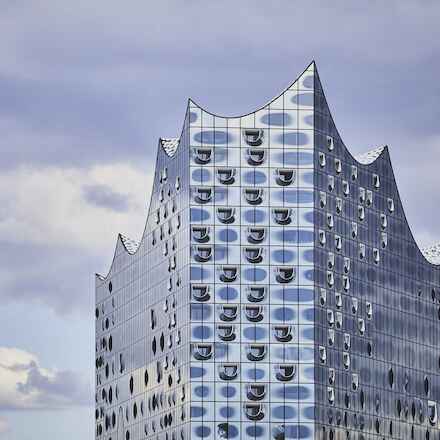
  • Public cultural event at the Elbphilarmonie – with Nora Bossong, Rainer Moritz and the Johannes Motschmann Trio
  • Presentation of the €1 million Körber European Science Prize – one of Europe’s most prestigious research awards – on 20 September.

Programme

Thursday, 19 September 2024

10:30-10:00 | Welcome coffee

11:00-11:10 | Welcome address

  • Thomas Paulsen (Member of the Executive Board, Körber-Stiftung)
  • Katharina Fegebank (Senator for Science, Free and Hanseatic City of Hamburg)
  • Jann Wilken / Körber-Stiftung

11:10-11:40 | Keynote
Much more than a market: A new Single Market for a larger world

  • Enrico Letta (President, Jacques Delors Institute, former Prime Minister of Italy)

Load external video from YouTube.

Find out more in our privacy policy.

Enrico Letta: Much more than a market. A new Single Market for a larger world | Hamburg Science Summit 2024

11:40-12:30 | Opening panel

A technologically sovereign Europe: Challenges, opportunities, and the way forward
Plenary table | Moderated by Terry Martin (International News Anchor)

  • Uwe Cantner (Chairman, Expert Commission for Research and Innovation of the German Federal Government (EFI), Friedrich Schiller University Jena)
  • Tino Krause (Director Central Europe, Meta Platforms Inc.)
  • Maria-Cristina Russo (Director for Prosperity, Directorate General Research and Innovation, European Commission)

Developments in recent years have raised doubts about Europe’s com petitiveness and technological sovereignty. In key areas such as artificial intelligence, digital services or semiconductors, Europe is lagging be hind its American and Asian partners. Even in markets with a tradition ally strong European share, such as the automotive industry, European players are struggling to meet the demand for innovation in battery technology or digitalisation. At the same time, the changing geopolitical environment has sparked concerns about supply chain risks and Europe’s dependencies on international markets. This raises the question of how Europe — including, but not limited to, EU member states — should strengthen its technological sovereignty.

Load external video from YouTube.

Find out more in our privacy policy.

A technologically sovereign Europe: Challenges, opportunities, and the way forward | Hamburg Science Summit 2024

12:30-13:30 | Lunch break

13:30-14:30 | Parallel sessions

The global race for AI: How can Europe keep up and find its own way?
Plenary table | Moderated by Manuela Lenzen

  • Alena Buyx (Former Chair, German Ethics Council)
  • Susanne Beckers (AI Strategist, SAP SE)
  • Morten Irgens (Vice Chair, Confederation of Laboratories of AI Research in Europe)

Artificial Intelligence is a critical benchmark for Europe’s competitiveness and technological sovereignty. However, Europe faces challenges in de livering its own AI solutions, with Large Language Models being the most prominent example. European AI players have attracted significantly less funding than their American counterparts, and struggle with regulatory hurdles and limited data availability. As a result, Europe may not only fall behind in the global AI competition, but also fail to incorporate its norms and values into future AI systems. At the same time, Europe has strengths in basic AI research and a small but promising ecosystem of AI initiatives and start-ups. How can these strengths be further developed to create AI solutions that are both competitive and in line with Europe’s strategic interests and ethical standards?

Load external video from YouTube.

Find out more in our privacy policy.

The global race for AI: How can Europe keep up and find its own way? | Hamburg Science Summit 2024

Green Chemistry — Towards a closed anthropogenic carbon cycle
Roundtable | Hosted by Max Planck Society

  • Patrick Cramer (President, Max Planck Society)
  • Walter Leitner (Director, Max Planck Institute for Chemical Energy Conversion)
  • Constanze Neumann (Max-Planck-Institut für Kohlenforschung)
  • Javier Pérez-Ramírez (ETH Zurich)
  • Silvia Vignolini (Director, Max Planck Institute of Colloids and Interfaces Potsdam)

Europe stands at a pivotal moment in shaping its innovation ecosystems. Despite progress through HorEurope is already replacing oil and gas with green technologies in the energy sector, with Germany as a prime example. However, Europe’s manufacturing sector is still very carbon intensive. For the manufacturing supply to become net-zero or even carbon negative, chemical products must be produced using non-fossil carbon sources. Carbon dioxide, biomass, and recycled materials are three complementary pillars to transform the current linear chemical industry into a resilient circular economy. The roundtable, organised by the Max Planck Society, will explore how “Green Chemistry”, including cutting-edge catalysis science, is already contributing to Europe’s prosperity today and what progress can be expected in the near future.

  • Jann Wilken / Körber-Stiftung

14:30-15:30 Parallel sessions

Is the future still green? Europe’s strengths and weaknesses in sustainable energy supply
Plenary table | Moderated by Jennifer Porto

  • Clare Grey (University of Cambridge)
  • Simon Müller (Director Germany, Agora Energiewende)
  • Nicolas Steinbacher (Program Lead Germany, Northvolt)

Decarbonising the energy system is a key part of the transition to sustain ability. In addition to scaling up green energy supply and infrastructure, affordable and efficient energy storage is essential to achieve Europe’s net-zero goals. However, Europe is struggling to keep up in battery tech nology and related areas of green innovation such as electric mobility, with delayed investment, lack of innovation, and insufficient manufacturing capacity being part of the problem. At the same time, the transformation of the energy system has created competitive disadvantages in energy prices, especially for German industry, and has created dependencies and supply chain risks for raw materials such as lithium or rare earths. If Europe wants to lead the green transition, how should it respond to these issues?

Load external video from YouTube.

Find out more in our privacy policy.

Is the future still green? Europe’s strengths and weaknesses in sustainable energy supply | Hamburg Science Summit 2024

Scientific policy advice: Between policy relevance and scientific independence
Roundtable | Hosted by Max Planck Society

  • Ilja Rudyk (Chief Economist Unit, European Patent Office)
  • Joachim Fiedler (CEO and Founder, FIDLOCK)
  • Ia Modin (Partner, GOZZO Advokater)
  • Andreas Schuster (CTO and Founder, Orcan Energy)

Patents play a crucial role in converting scientific research into com mercially viable products, and are greatly important as key assets for startups and investors. However, despite a strong foundation in scientific research, Europe is witnessing a gradual decline in its share of patent failings, particularly in the newest technological sectors. What strategic measures can be taken to enhance Europe’s performance in the global innovation arena? The roundtable, organised by the new Observatory on Patents and Technology of the European Patent Office, will foster a deeper understanding of effective IP management and discuss solutions to em power European innovators in the competitive global market for patents and technological advances.

  • Jann Wilken / Körber-Stiftung

Embarking on a PhD and an academic career in Europe — What are the prospects?
Roundtable | Hosted by Young Academy of Europe

  • Katalin Solymosi (Chair, Young Academy of Europe)
  • Karl Kilbo Edlund (Board Member, European Council of Doctoral Candidates and Junior Researchers)
  • Farah Islam (Board Member, Marie Curie Alumni Association)
  • Eystein Jansen (Vice-President, European Research Council)
  • Nadine Ritter (University of Copenhagen)

How attractive are doctoral training and research careers in Europe for the X, Y and Z generations? What initiatives can we take to attract and retain the best talents in Europe? How can we improve doctoral training and career prospects to overcome issues such as precarity, the unidirectional brain drain within Europe, the relatively low salaries, and the constant publish or perish competition leading to poor mental health in academia? Organised by the Young Academy of Europe and involving representatives of all career stages — from doctoral and postdoctoral researchers to young principal investigators and senior high-profile researchers — the roundtable will discuss the situation of the future generations of the European academic landscape under the current conditions.

  • Jann Wilken / Körber-Stiftung

15:30-16:00 Coffee break

16:00-17:00 Parallel sessions

The future of health: Medical breakthroughs made in Europe>
Plenary table | Moderated by Vivienne Perry

  • Iordanis Arzimanoglou (Former Program Manager Health and Biotechnology, European Innovation Council)
  • Maria Blasco (Director, Spanish National Cancer Research Centre)
  • Myriam Mendila (Chief Scientific Officer, CureVac N.V.)

Medical research is at a turning point. The COVID-19 crisis has shown that Europe is capable of efficient R&I processes, with the mRNA tech nology being the most prominent example. Part of the success story has been increased cross-sector collaboration between academics, medical companies, regulators, and financial incentives provided by government and private actors. At the same time, the crisis revealed barriers to inno vation, such as poor availability and quality of health data, or problems in scientific and administrative infrastructures. This raises questions about the future of medical research in Europe: What breakthroughs can be expected from European medical researchers in the coming years? Is the COVID case a viable template for other R&I processes in Europe? And how can medical innovation contribute to Europe’s technological sovereignty without undermining global justice, particularly with regard to public health in the Global South?

Load external video from YouTube.

Find out more in our privacy policy.

The future of health: Medical breakthroughs made in Europe | Hamburg Science Summit 2024

Science and politics: The state of evidence-based policy in Europe
Roundtable | Hosted by German National Academy of Sciences Leopoldina

  • Gerald Haug (President, German National Academy of Sciences Leopoldina)
  • Jette Bredahl Jacobsen (Vice-Chair, European Scientific Advisory Board on Climate Change)
  • David Mair (Head of Unit, EU Joint Research Centre)
  • Paweł Rowiński (President, All European Academies)

With Europe facing significant challenges and yet nurturing the ambition to increase its competitiveness and sovereignty, the integration of scientific evidence into decision-making is critical. As problems become more complex and information more abundant, it is often hard to distinguish facts from disinformation, or evidence from mere opinion. This makes it demanding for scientific advisors to transfer insights from science into political and societal contexts. The roundtable, organised by the German National Academy of Sciences Leopoldina, will explore obstacles and best practices for producing, delivering, and taking up science-based advice. It will also delve into strategies for overcoming barriers to evidence-based policy and discuss how Europe can lead in grounding policies in robust scientific expertise.

  • Jann Wilken / Körber-Stiftung

17:00-18:00 Closing session

Breakthrough and beyond: Cutting-edge research in Europe
Plenary Table | Moderated by Helen Czerski

  • Cordelia Schmid (Research Director, French Institute for Research in Computer Science and Automation)
  • Peter Seeberger (Director, Max Planck Institute of Colloids and Interfaces Potsdam)
  • Nicola Spaldin (ETH Zurich)

Load external video from YouTube.

Find out more in our privacy policy.

Breakthrough and beyond: Cutting-edge research in Europe | Hamburg Science Summit 2024

What’s it like to be a scientist? (for registered school students only)
Young Science Meet-Up | Hosted by Young Science Hamburg

  • Weihan Li (RWTH Achen University)
  • Cordelia Schmid (Research Director, French Institute for Research in Computer Science and Automation)
  • Erin Schuman (Director, Max Planck Institute for Brain Research)
  • Jann Wilken / Körber-Stiftung

18:00-18:10 Closing remarks

Matthias Mayer (Head of Science Department, Körber-Stiftung)

18:10 pm
Dinner

20:00 Elbphilharmonie Hamburg, Recital Hall
Public cultural event | Discussion and concert
​​​Europe in transition – Tradition meets the future

  • Nora Bossong (Writer)
  • Rainer Moritz (Director, Literaturhaus Hamburg)
  • Music performance: Johannes Motschmann Trio
  • Jann Wilken / Körber-Stiftung

Friday, 20 September 2024

11:00-12:30 Körber European Science Prize (registration and ID required)
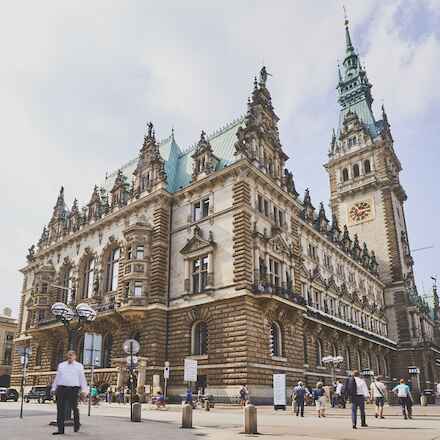
Award ceremony | Hamburg City Hall, Great Hall
The Körber European Science Prize 2026 will be awarded to Erin Schuman (Max Planck Institute for Brain Research). Further information.

12:30-14:00 Körber European Science Prize (registration and ID required)
Reception​​​​​ | Hamburg City Hall

  • Jann Wilken / Körber-Stiftung

Learn more about the Körber European Science Prize